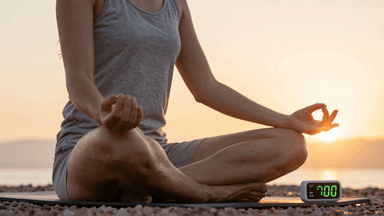
The minutes after waking are the most neurologically influential of the day. Your cortisol is at its natural morning peak, your nervous system is transitioning from overnight parasympathetic dominance to active readiness, and the habits you perform in this window shape your baseline state for the next 8–12 hours.
Most people fill this window with screens, news, or the immediate rush to get dressed and caffeinated. A 10-minute morning breathwork routine is the alternative: a structured sequence of three breathing techniques that activate focus, reduce cortisol, and set a calm-but-alert baseline before anything else competes for your attention.

Why Morning Is the Best Time for Breathwork
Your body wakes up in a predictable hormonal sequence. Cortisol spikes in the first 30–60 minutes — the Cortisol Awakening Response (CAR) — which is your body's natural energising signal. This spike is useful: it drives alertness and gets you ready to engage. The problem is that modern mornings often amplify it further with stress (checking email, traffic anxiety, time pressure), turning a healthy awakening into a low-grade threat response before breakfast.
Breathwork in this window doesn't suppress the morning cortisol spike — it shapes it. Controlled breathing regulates how quickly the sympathetic activation builds, which means you arrive at focus without crossing into anxiety or reactivity.
A second physiological reason: your breathing muscles have been operating on automatic all night. A short intentional practice "wakes up" your diaphragm and resets the breathing mechanics that are the foundation of voice, posture, and sustained focus throughout the day.
Breathing Timer
Free online timer — no signup required
The 10-Minute Morning Routine
This routine is built around three techniques in sequence, each targeting a different physiological mechanism. Together they take 10 minutes: 2 minutes for the reset, 4 minutes for the focus, and 4 minutes for the ground.
You don't need any equipment. A free online breathing timer handles the pacing.
Technique 1 — Physiological Sigh (2 Minutes)
Purpose: Clear overnight CO₂ buildup. Shift from sleep-state to awake-alert within seconds.
How to do it:
- Take a full, deep inhale through your nose until your lungs are completely full
- Without exhaling, take one short second sniff through your nose — a "top-up" that fully inflates the lung's lower air sacs
- Exhale slowly and completely through your mouth — make this exhale long and controlled, emptying your lungs fully
- Return to normal breathing for 20–30 seconds, then repeat
Timing: One physiological sigh takes roughly 15–20 seconds. Aim for 4–6 repetitions over 2 minutes, with normal breathing between each.
Why it works: During sleep, your breathing is shallow and your alveoli — the tiny air sacs in your lungs — partially collapse. The double inhale re-inflates them, dramatically increasing the surface area available for gas exchange. The extended exhale dumps accumulated CO₂, which is the primary chemical driver of the groggy, slightly foggy feeling most people experience in the first minutes after waking.
Set a 2-minute countdown timer and begin. By the time it rings, most people notice noticeably cleaner thinking and a mild physical energy uplift.
Technique 2 — Box Breathing (4 Minutes)
Purpose: Build cognitive focus. Prepare the prefrontal cortex for structured thinking, decisions, and communication.
How to do it:
- Inhale through your nose for 4 counts
- Hold your breath for 4 counts
- Exhale through your mouth for 4 counts
- Hold for 4 counts before the next inhale
- Repeat — each full box takes 16 seconds
Timing: 4 minutes gives you approximately 15 complete box cycles.
Why it works: Box breathing (also called tactical breathing or 4-4-4-4 breathing) is used by US Navy SEALs, elite athletes, and performance psychologists worldwide for one reason: it works. The equal-ratio pattern of inhale, hold, exhale, hold creates heart rate variability coherence — a neurological state where heart, breath, and brain electrical activity synchronise. In this state, your prefrontal cortex — the part responsible for planning, decision-making, and emotional regulation — is maximally online.

Use GoTimer's breathing timer to set a 4-4-4-4 pattern. The audio cues let you close your eyes and focus entirely on the breath without watching a screen.
Breathing Timer
Free online timer — no signup required
Technique 3 — 4-7-8 Breathing (4 Minutes)
Purpose: Ground the nervous system. Establish a calm, parasympathetic baseline before engaging with demands of the day.
How to do it:
- Exhale completely through your mouth, making a gentle "whoosh" sound
- Close your mouth and inhale through your nose for 4 counts
- Hold your breath for 7 counts
- Exhale completely through your mouth for 8 counts (a slow, controlled whoosh)
- That's one cycle. Repeat immediately.
Timing: Each 4-7-8 cycle takes about 19–20 seconds. 4 minutes gives you 12 complete cycles.
Why it works: The 4-7-8 pattern (developed and popularised by Dr Andrew Weil) works through a simple mechanism: the exhale is twice as long as the inhale. Extended exhale activates the vagus nerve via the Hering-Breuer reflex, directly engaging the parasympathetic nervous system. The 7-count hold builds mild CO₂ tolerance, which over time reduces the anxiety response to rising CO₂ during stressful situations.
The result after 4 minutes: a measurably lower resting heart rate, relaxed muscle tension in the jaw, neck, and shoulders, and a grounded, ready feeling that's distinct from both the groggy baseline you started with and the wired, caffeinated state many people mistake for readiness.
Setting Up Your Morning Timer
The simplest approach is three separate timers in sequence:
- 2-minute countdown — physiological sigh phase. When it rings, switch to box breathing.
- 4-minute countdown — box breathing phase. When it rings, switch to 4-7-8.
- 4-minute countdown — 4-7-8 phase. When it rings, the routine is complete.
GoTimer's countdown timer resets quickly between rounds. Alternatively, set a single 10-minute timer and track your own transitions — once you've practised the routine a few times, the sequence becomes second nature.
For guided pacing within each technique, GoTimer's breathing timer lets you configure custom inhale, hold, and exhale durations and provides audio cues through each cycle.
Meditation Timer
Free online timer — no signup required
Building the Morning Habit
The biggest obstacle to morning breathwork is not motivation — it's logistics. Here's what works:
Anchor it to waking, not to a time. "I do breathwork when I get up" is more robust than "I do breathwork at 7am." Travel, late nights, and schedule changes won't break it.
Lay out your mat or cushion the night before. The visual cue in your bedroom removes the micro-decision on whether to do it. If you prefer to sit in a chair, put it in position the night before.
Do it before your phone. The moment you check your notifications, your mind is already populated with other people's agendas. The breathwork window requires a blank nervous system — you don't get that after 3 minutes of email.
Stack it with light exposure. Morning sunlight exposure in the first 30 minutes after waking is one of the strongest circadian regulators. Open your curtains or step outside during or after your breathwork routine — the combination of breathwork and natural light produces a more powerful cortisol calibration than either alone.

What to Expect Week by Week
Week 1: The techniques feel unfamiliar. Box breathing may cause slight lightheadedness (normal — your CO₂ levels are shifting). You'll notice a mild post-routine calm.
Week 2: The sequence starts to flow. The physiological sigh begins to feel like a reliable reset. You'll notice the routine's effects lasting further into the morning.
Week 3–4: The routine becomes automatic. You'll start noticing the absence on mornings you miss it — a useful signal that it's working. Heart rate variability data (if you track it) will typically show measurable improvement by this point.
Month 2 and beyond: The primary benefit becomes baseline reduction in stress reactivity throughout the day — not just in the morning. Regular breathwork builds what researchers call respiratory resilience: a lower resting sympathetic activation and faster recovery from stress spikes.
Breathing Timer
Free online timer — no signup required
A Simplified Version for Busy Mornings
When time is genuinely tight, a 3-minute version preserves the core benefit:
- 30 seconds: 3 physiological sighs
- 90 seconds: Box breathing (4-4-4-4), 5–6 cycles
- 60 seconds: 4-7-8 breathing, 3 cycles
Set your 3-minute timer and run through the compressed sequence. It won't replace the full 10-minute routine, but it maintains the habit and produces a partial effect — far better than skipping entirely.
The morning breathwork routine is one of those practices that sounds modest until you've done it consistently for a month. Ten minutes of structured breathing changes how you start the day, and that changes how the day goes.